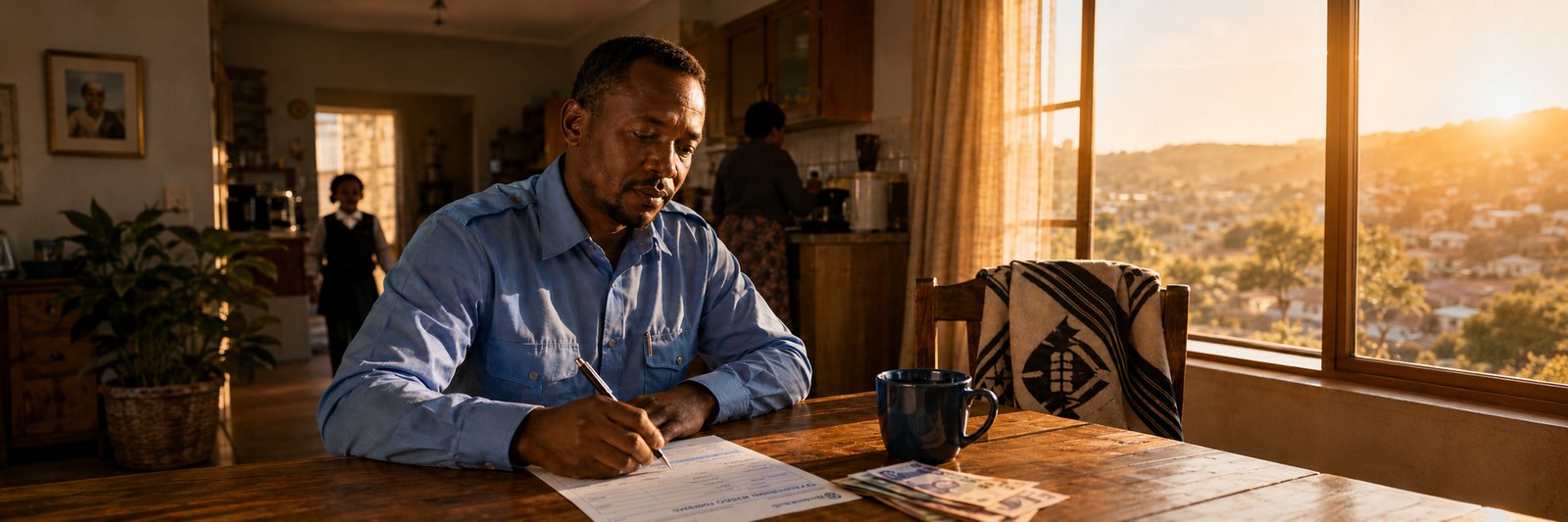

There are people who always seem to be in the right place at the right time. They somehow have money when everyone else is scrambling to borrow. Their businesses survive difficult years while others disappear. They buy property before prices climb, seize opportunities others somehow miss and navigate financial storms with an ease that looks almost unfair.
We usually have an explanation ready. “They’re lucky.” It is one of the most common compliments people receive about money. It is also one of the most misunderstood.
Luck is a comforting explanation because it asks very little of us. If someone else succeeded because fortune smiled on them, perhaps there was never much we could have done differently. It allows us to admire success without examining the decisions that created it.
But what if many of the people we describe as lucky simply prepared long before anyone realised preparation would matter? That possibility changes everything. It suggests financial security is not reserved for people born under fortunate stars. More often than we realise, it belongs to people who built systems while everyone else relied on good intentions.
There is a lie almost all of us tell ourselves about money. “Next month I'll start saving.” “Once this loan is finished, I’ll become more disciplined.” “When I earn a little more, I'll finally invest.”
Every promise is addressed to a future version of ourselves who somehow earns more, spends less, has fewer responsibilities and possesses a level of financial discipline today's version has failed to discover.
The problem is that this person rarely arrives. Next month inherits the same school fees, the same fuel prices, the same family responsibilities and the same unexpected expenses. Before long, next month becomes next year. Next year eventually becomes one day.
Perhaps the greatest financial mistake many of us make is believing that better financial decisions begin with stronger willpower. The evidence suggests something different. Good financial behaviour rarely begins with discipline. It begins with design.
When decisions become exhausting
Think about someone whose home always seems organised. At first glance it looks like incredible discipline. Look closer and something else usually emerges. Everything has a place. The keys always find the same bowl. Shoes return to the same cupboard. Laundry follows the same rhythm every week. Tidiness becomes less about remembering and more about removing decisions. The system quietly does the work. Money behaves in much the same way.
Many households unknowingly make every good financial decision harder than it needs to be. Every payday becomes another negotiation. “Should we save this month?” “Can we afford to invest?” “Should we pay extra towards the loan?” Every question demands another act of self-control.
Willpower is surprisingly fragile. It weakens when we are tired, stressed or under financial pressure; precisely the moments when good decisions matter most.
Systems solve that problem. Imagine two civil servants earning exactly the same salary. The first promises to save whatever remains at month-end. The second instructs the bank to transfer E500 into savings the morning the salary arrives.
Neither necessarily has stronger character. One simply removed the decision. The money never had the opportunity to become something else. That is why some people appear remarkably disciplined with money. Often, they have simply built lives that ask less of their discipline.
Even governments don’t trust willpower
Governments understand this principle better than many households do. Consider the Revenue Stabilisation Fund. Government created it because revenue from the Southern African Customs Union (SACU) rises and falls. During good years it becomes tempting to spend as though prosperity will continue indefinitely. Then collections slow and painful adjustments become unavoidable.
The Fund interrupts that cycle. Instead of trusting future governments to find the discipline to save, it creates a system that sets money aside while conditions are favourable so resources remain available when circumstances change.
The lesson stretches far beyond public finance. Families experience their own SACU moments. A bonus arrives. A tax refund lands unexpectedly. Back pay appears after months of waiting. A particularly good month in business leaves extra cash in the account.
Without a system, those moments often disappear into consumption before they become opportunity. With one, they become the beginning of resilience. The amount of money has not changed. Only the structure has. More often than we realise, it is the structure, not the amount that determines whether temporary prosperity becomes lasting financial progress.
Small systems, big consequences
If systems matter more than discipline, what does that actually look like? The answer is surprisingly ordinary. A stop order that moves money into savings before you can spend it. Treating an emergency fund as a monthly obligation rather than an occasional ambition.
Reviewing your budget on the same day every month. None of these habits is dramatic. They are unlikely to impress anyone. That is precisely why they work. The best financial systems operate quietly in the background. They ask very little of us once they are in place. They make the better decision the easier one.
James Clear, in Atomic Habits, writes that we do not rise to the level of our goals; we fall to the level of our systems. Goals give us direction. Systems determine whether we ever arrive. Most people promise themselves they will save whatever is left at month-end.
For many households, very little is left. Not necessarily because they are irresponsible, but because money is remarkably good at finding somewhere to go.
Perhaps we have been asking the wrong question. Instead of asking, “How do I become more disciplined?” perhaps we should ask, “How do I make the right decision before temptation has a chance to negotiate with me?” Only one changes behaviour.
What this means for business
The lesson does not stop at the household gate. SMEs live or die by systems too. Many businesses are not undone by one catastrophic mistake. They are weakened by dozens of small decisions that seem harmless in isolation.
The strongest businesses are rarely those led by people with extraordinary instincts every day. More often, they are businesses with routines that protect them from ordinary human nature.
They know how much cash they need before expanding. They separate working capital from profit. They prepare for slower months while business is still good instead of hoping the good months will last forever.
That is not pessimism. It is prudence.
Where luck really comes from
Perhaps this is where we misunderstand luck. We see the entrepreneur with cash when opportunity appears. The family that avoids debt after an emergency. The couple who pay school fees without panic.
What we rarely see are the decisions made years earlier. The stop order that transferred money every payday. The old car kept for two more years. The emergency fund that grew so slowly it barely seemed worth noticing.
None of those decisions felt extraordinary at the time. Together, they changed everything. Luck, it turns out, often leaves clues. It usually arrives wearing the clothes of preparation.
Don’t wait for a better version of yourself
Over the past few weeks, Plain Money has explored inflation, borrowing, planning and the habits that shape our financial lives. Running through each of those conversations has been the same thread.
Money is rarely won or lost in one dramatic decision. It is shaped by what we repeatedly do when nobody is watching. That should be encouraging. Financial progress does not require us to become completely different people overnight. It requires us to stop relying on a future version of ourselves who will somehow possess unlimited discipline, and instead build systems that help today's version make better decisions.
Good systems accept that we are human. They recognise that we become tired, emotional and distracted. They protect us from ourselves. That is why people who appear luckiest with money often have the least to do with luck at all.
They simply decided, long before opportunity appeared or crisis arrived, that they would not leave their financial future to chance. They designed it. Financial security is not built by hoping tomorrow’s version of you will make better decisions than today’s. It is built by creating systems that help today's version succeed, even on the days when discipline fails. Because luck may open a door once. Good systems keep it open.